
Everything about chlorine: the key to clear pool water
, by Rijo Veldhuis, 5 min reading time
, by Rijo Veldhuis, 5 min reading time
Chlorine is the powerhouse when it comes to keeping pool water clean and safe. But with all the different types of chlorine available – tablets, powder, liquid, stabilized, and unstabilized – it can be quite a challenge to determine what you need. Don't worry, we are diving into the world of chlorine together and will explain everything you need to know.
Chlorine acts as a disinfectant that kills bacteria, viruses, and other microorganisms. It prevents algae growth and breaks down organic substances such as sweat and sunscreen. It does this by breaking down the cell walls of harmful microorganisms, preventing them from multiplying. The result? Clean, fresh, and safe swimming water.
Stabilized chlorine contains cyanuric acid, a substance that makes the chlorine more resistant to UV radiation from the sun. Without this stabilizer, chlorine would evaporate quickly under the influence of sunlight, requiring you to replenish it much more often. Stabilized chlorine therefore works longer and more gradually and is ideal for pools where you want to keep the water balance stable.
Unstabilized chlorine works instantly, but also disappears faster due to the sun. This type of chlorine is perfect for quick cleaning, for example, if the water has become cloudy after a storm or intensive use. Because it does not contain a stabilizer, you do have to add it more often to keep your pool clean.
There are various forms of chlorine, each with its own application:
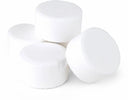
✅ Chlorine tablets – The most commonly used and convenient option. Tablets dissolve slowly and ensure a constant release of chlorine. They are often used in a chlorine floater, skimmer, or automatic dosing pump.
✅ Chlorine shock (granulate) – This is a fast and powerful chlorine boost. Ideal if your pool water has become cloudy or green. Chlorine shock is often used after periods of heavy use or when the water has become unbalanced.
✅ Liquid chlorine (sodium hypochlorite) – This liquid chlorine solution is mainly used in automatic dosing systems. It is easy to add but has a limited shelf life. Because of this, you must use it in time before its effectiveness decreases.
Chlorine works best when the water balance is in order. This means that in addition to the chlorine level, you must also pay attention to the pH value and alkalinity (TA).
🔹 Ideal chlorine level: Between 1 and 2 ppm. This is sufficient to combat bacteria and algae without causing irritation to skin and eyes.
🔹 pH value: Between 7.2 and 7.6. A pH value that is too low or too high makes chlorine less effective.
🔹 Alkalinity (TA): Ensure that the TA value is correct, as this helps keep the pH stable and prevents fluctuations in water quality.
✔ Use a test kit: Check the chlorine and pH levels at least twice a week. With intensive use of the pool, daily testing is recommended.
✔ Wear gloves: Especially when handling chlorine powder or granulate. Avoid direct contact with skin and eyes.
✔ Dose correctly: Too much chlorine can cause skin and eye irritation, while too little chlorine leads to cloudy water and algae.
✔ Place chlorine tablets in a floater or skimmer: This ensures an even release of chlorine and prevents damage to pool liners.
✔ Always add chlorine shock in the evening: Sunlight breaks down chlorine quickly, so by adding it in the evening, it has all night to work optimally.
This depends on various factors such as temperature, sunlight, and how often you use the pool. In general:
Chlorine is indispensable for a clean and safe pool, but it is important to choose the right variant and dose it correctly. Whether you go for the long-lasting stability of chlorine tablets, the fast-acting power of chlorine shock, or the automatic control of liquid chlorine – if you keep the water balance in check, your pool will remain crystal clear and ready for swimming.
So put on your swimsuit and dive into that fresh water while the chlorine does the work!