
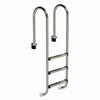
Stainless steel 304 vs. 316: Which pool ladder should you choose?
, by Rijo Veldhuis, 3 min reading time
, by Rijo Veldhuis, 3 min reading time
When choosing a swimming pool ladder, it’s not just about the number of steps or the design, but also about the material. A frequently asked question is: What is the difference between 304 and 316 stainless steel? And more importantly: which one is suitable for your pool?
In this blog, we explain everything you need to know about these two types of stainless steel and help you make the right choice.
Stainless steel is an alloy of iron with chromium and other metals that make the material resistant to rust and corrosion. Within stainless steel, there are different ‘grades’ – of which 304 stainless steel and 316 stainless steel are the most commonly used for pool ladders.
304 stainless steel is the most common type of stainless steel. It contains chromium and nickel and is highly resistant to weather conditions, such as rain, wind, and sun.
Cost-effective – cheaper than 316 stainless steel
Durable – resistant to normal outdoor conditions
Versatile – perfect for private pools without salt electrolysis
304 stainless steel is less resistant to salt and chlorine in high concentrations. When used in saltwater or with intensive chlorine use (such as in public pools), the material may corrode over time.
316 stainless steel contains an additional element: molybdenum. This makes the material even more resistant to corrosion, especially in aggressive environments like saltwater or chlorinated pools.
Excellent corrosion resistance
Ideal for saltwater pools, coastal areas, or spas
Durable in the long term, even with intensive use
Higher price point
Not necessarily needed for standard private pools without saltwater